The right fermentation salt ratio is a percentage of weight, not a number of spoonfuls. For shredded vegetables like sauerkraut, the tested extension ratio works out to about 2.25 to 2.4 percent of the cabbage’s weight. For whole or chunky vegetables sitting in brine, extension guidance runs from about 3 percent up to 5 percent of the water’s weight, and the tested fermented dill pickle brine is stronger still.
This page turns those percentages into grams. Every number below is either taken from a university extension or National Center for Home Food Preservation (NCHFP) publication, or is simple arithmetic on one. Where a figure is general guidance rather than a tested recipe, we say so.
Why does the salt ratio matter in fermentation?
Salt is not seasoning here. It is the control knob. NCHFP explains that salt favors the growth of the desirable lactic acid bacteria while inhibiting others. Ohio State University Extension puts it more bluntly: the amount of salt in sauerkraut is critical to food safety and should not be adjusted.
Two rules follow from that:
- Too little salt gives the wrong microbes a head start and tends to produce soft, off-flavored ferments. NCHFP says plainly not to make sauerkraut or fermented pickles by cutting back the salt.
- Too much salt slows the good bacteria down. You get a stalled, salty jar instead of a sour one.
The safe zone is narrow enough that a level tablespoon of one salt and a level tablespoon of another can land you on different sides of it. That is the whole case for weighing.
Dry salting vs brining: which method uses which ratio?
There are two ways to salt a ferment, and the percentage means something different in each.
Dry salting is for vegetables that make their own brine: shredded cabbage, grated carrots, shredded turnips. You weigh the prepared vegetables, sprinkle on a percentage of that weight in salt, massage or pack, and the salt pulls out enough juice to cover everything.
Brining is for vegetables that stay whole or in chunks: cucumbers, carrot sticks, green beans, cauliflower. They can’t release enough liquid, so you pour salt water over them. Here the percentage is of the water’s weight.
| Dry salting | Brining | |
|---|---|---|
| Best for | Shredded or grated vegetables | Whole, sliced, or chunked vegetables |
| Percentage is of | Vegetable weight | Water weight |
| Typical range in extension guidance | About 2.25% (tested sauerkraut) | About 3% to 5%, higher for tested dill pickles |
| Example | Sauerkraut | Fermented dill pickles, brined carrots |
| What you weigh | Trimmed, shredded vegetables | Water (1 mL of water weighs 1 g) |
University of Illinois Extension sums up the general pattern in its fermentation handout: a 3 percent concentration for shredded vegetables like cabbage, and 5 percent for large vegetables such as cucumbers and carrots. The tested NCHFP sauerkraut recipe sits a little lower than that 3 percent, which is why we show both below.
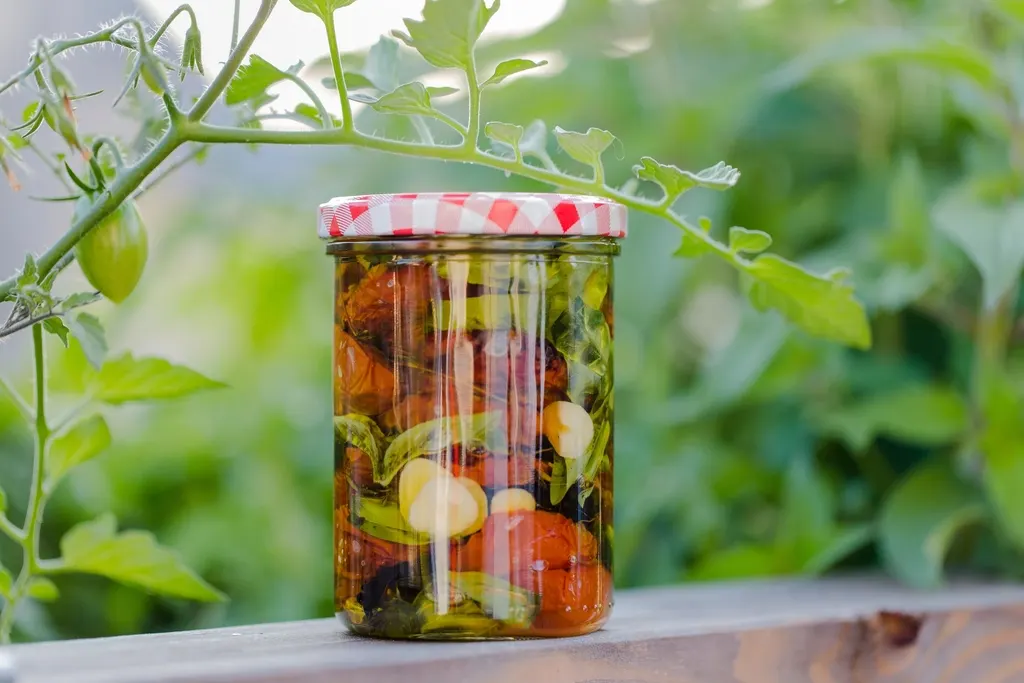 Photo: unknown, CC0, via rawpixel
How much salt for sauerkraut? The dry salt ratio in grams
The NCHFP sauerkraut recipe uses 3 tablespoons of canning or pickling salt for every 5 pounds of shredded cabbage. Ohio State, Penn State, and Kansas State extension publications all repeat that same ratio. University of Illinois Extension gives the weight of those 3 tablespoons as 1.8 ounces, about 51 grams. Five pounds of cabbage is 2,268 grams, so:
51 g salt ÷ 2,268 g cabbage = about 2.25 percent.
(Using Morton’s label figure of 1.5 grams per 1/4 teaspoon instead gives about 54 grams, or 2.4 percent. Either way, the tested ratio lives between 2.25 and 2.4 percent, which is why our sauerkraut guide recommends 2 to 2.5 percent.)
Here is that ratio scaled to the batch sizes people actually make. Weigh the cabbage after coring and shredding.
| Shredded cabbage | Salt at 2% | Salt at 2.25% (tested ratio) | Salt at 2.5% |
|---|---|---|---|
| 500 g (1.1 lb) | 10 g | 11 g | 13 g |
| 750 g (1.7 lb) | 15 g | 17 g | 19 g |
| 1,000 g (2.2 lb) | 20 g | 23 g | 25 g |
| 1,500 g (3.3 lb) | 30 g | 34 g | 38 g |
| 2,000 g (4.4 lb) | 40 g | 45 g | 50 g |
| 2,268 g (5 lb) | 45 g | 51 g | 57 g |
The formula is the same for any weight: vegetable grams × 0.0225 = salt grams. Swap in 0.02 or 0.025 for the other columns.
How much salt for a 2%, 3%, or 5% brine?
For brining, weigh the water, not the vegetables. A liter of water weighs 1,000 grams, so a 2 percent brine is 20 grams of salt per liter. Here are the common strengths for the volumes you are most likely to mix. Values are rounded to the nearest gram and calculated as a percent of the water’s weight.
| Water | 2% | 2.5% | 3% | 3.5% | 5% |
|---|---|---|---|---|---|
| 1 cup (237 g) | 5 g | 6 g | 7 g | 8 g | 12 g |
| 1 pint (473 g) | 9 g | 12 g | 14 g | 17 g | 24 g |
| 1 quart (946 g) | 19 g | 24 g | 28 g | 33 g | 47 g |
| 1 liter (1,000 g) | 20 g | 25 g | 30 g | 35 g | 50 g |
| 2 quarts (1,893 g) | 38 g | 47 g | 57 g | 66 g | 95 g |
| 1 gallon (3,785 g) | 76 g | 95 g | 114 g | 132 g | 189 g |
The formula: water grams × percentage = salt grams. For 3 percent, multiply by 0.03.
Percent of water or percent of total brine?
You will see both conventions online. Some calculators treat the percentage as salt divided by water; others divide by the total weight of water plus salt. The difference is small: a 5 percent brine is 50 grams per liter one way and about 53 grams the other. Pick one convention and stick with it. The table above uses percent of water, which is the simplest to do in your head.
How the extension volume measures line up
If you are working from an extension recipe written in spoons, these are the conversions, using roughly 17 to 18 grams per tablespoon of canning salt:
| Extension instruction | Source | Approximate strength |
|---|---|---|
| 1 teaspoon salt per cup of water (“standard brine”) | Kansas State | About 2.5% |
| 2 teaspoons salt per cup of water (high-water vegetables) | Kansas State | About 5% |
| 1 1/2 tablespoons salt per quart of water (sauerkraut top-up brine) | NCHFP, Ohio State, Penn State | About 2.7% to 2.9% |
| 2 tablespoons (27 g) salt per quart of water | Illinois Extension | About 3% |
| 3 tablespoons (45 g) salt per quart of water | Illinois Extension | About 5% |
| 1/2 cup salt + 8 cups water + 1/4 cup 5% vinegar (fermented dill pickles) | NCHFP | About 7% of the liquid |
Notice the spread on that last row. The tested NCHFP fermented dill pickle recipe is a strong brine: 1/2 cup of salt, 1/4 cup of 5 percent vinegar, and 8 cups of water per gallon of container, poured over 4 pounds of 4 inch pickling cucumbers. If you are making fermented dill pickles and want a tested process, follow that recipe as written rather than dropping to a 3 percent hobby brine.
Which salt should you use for fermenting?
NCHFP recommends canning or pickling salt. Ohio State gives the reason: it contains no iodine and no anti-caking agents. NCHFP adds that the anti-caking additives in table salt can cloud the brine, and that flake salts are not recommended because their density varies.
That density point is the real reason to weigh. A tablespoon of fine canning salt and a tablespoon of a coarse flake salt hold very different amounts of actual salt. By weight, 20 grams is 20 grams no matter which box it came from. Illinois Extension’s handout says it directly: it is best to weigh salt for accuracy.
Pantry pick: Morton Canning and Pickling Salt

Fine-grained, non-iodized salt is exactly what NCHFP and Ohio State Extension call for, and Morton is the brand behind the label weight (1.5 grams per 1/4 teaspoon) used in our sauerkraut math. This listing is a multi-pack of 4 pound boxes, which is a lot of kraut; check the pack count on the page before you order. This pick is based on the product's listed specs and the extension guidance above, not hands-on use.
Do you need a kitchen scale for fermenting?
For one-off batches using a tested spoon-measured recipe at full size, no. The extension recipes were written for spoons and they work. The scale earns its place the moment you change the batch size, switch salt brands, or ferment something the recipe didn’t cover. Then a percentage is the only portable number, and a percentage needs grams.
What to look for in a scale for fermenting:
- 1 gram increments. Anything coarser makes small brine batches guesswork.
- Tare. You weigh the shredded cabbage in the bowl, zero it, then weigh salt straight in.
- At least 5 kg (11 lb) capacity, enough for a full 5 pound kraut batch plus the bowl.
- A sealed control panel. Brine gets everywhere.
Pantry pick: Escali Primo Digital Food Scale
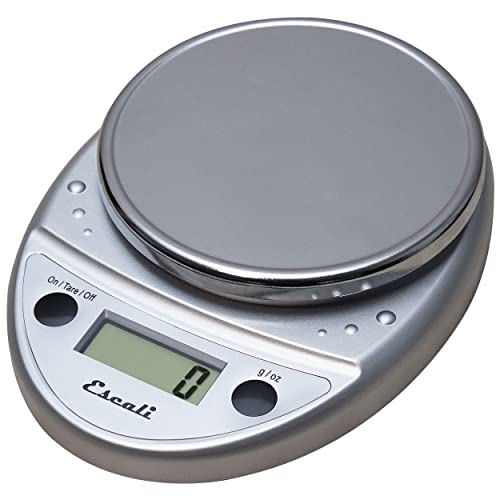
Escali lists an 11 pound (5,000 gram) capacity with 1 gram increments, a tare button, and a control panel sealed under a protective shield against spills, which covers all four points above. Owner reviews most often praise its accuracy to the gram; the most common complaint is that it shuts itself off after four minutes, so weigh your salt before you get distracted shredding. This pick is based on Escali's published specs and owner review patterns, not hands-on use.
If you want to compare other gram-accurate models, see current listings.
Does temperature change how much salt you need?
The salt ratio in the tested recipes stays the same. What changes is the timeline. NCHFP and Ohio State give these sauerkraut benchmarks:
| Temperature | What to expect |
|---|---|
| 70 to 75°F | Fully fermented in about 3 to 4 weeks (the recommended range) |
| 60 to 65°F | 5 to 6 weeks |
| Below 60°F | May not ferment, or may not reach proper acidity |
| Above 75°F | Kraut may become soft |
For fermented dill pickles, NCHFP gives 3 to 4 weeks at 70 to 75°F, 5 to 6 weeks at 55 to 65°F, and says to avoid temperatures above 80°F. Within the 2 to 2.5 percent range our sauerkraut guide uses, the higher end is the better choice for a warm kitchen. Outside that range, adjust the room, not the salt.
Can you ferment with less salt or no salt?
Not with the tested sauerkraut and fermented pickle recipes. NCHFP is explicit that you should not make sauerkraut or fermented pickles by cutting back on the salt required. The reduced-salt and no-salt options NCHFP does describe are for fresh-pack (vinegar) pickles, which rely on added vinegar rather than fermentation for their acidity.
If you need to watch sodium, the practical move is to eat less of the finished ferment or rinse it before serving. Changing the salt in the jar changes which microbes win.
The short version
- The tested sauerkraut ratio is 3 tablespoons of canning salt per 5 pounds of cabbage, about 51 to 54 grams, or 2.25 to 2.4 percent of the cabbage weight.
- Dry salt formula: shredded vegetable grams × 0.0225 = salt grams. For 1 kg of cabbage, that is about 23 grams of salt.
- Brine formula: water grams × percentage = salt grams. A 2 percent brine is 20 g per liter, 3 percent is 30 g per liter, 5 percent is 50 g per liter.
- Illinois Extension’s general guidance: about 3 percent for shredded vegetables and 5 percent brine for large vegetables like cucumbers and carrots.
- The tested NCHFP fermented dill pickle brine (1/2 cup salt, 1/4 cup 5 percent vinegar, 8 cups water) is about 7 percent.
- Use canning or pickling salt, and weigh it. Flake salts vary in density.
- Do not cut the salt in sauerkraut or fermented pickles. Ferment at 70 to 75°F for 3 to 4 weeks.
Keep going
The fermentation salt ratio is the foundation; now put it to work. Start with how to make sauerkraut in a mason jar, try a faster ferment with how to make kimchi at home, and learn to read the surface of your jar with kahm yeast vs mold. New to all of it? Our beginner’s roadmap to preserving food at home covers every method.
Sources for this guide: NCHFP’s Sauerkraut, Dill Pickles, and General Information on Fermenting; Ohio State University Extension’s Making and Preserving Sauerkraut; Penn State Extension’s Let’s Preserve: Sauerkraut; Kansas State Research and Extension’s Taking a New Look at Fermented Foods; and University of Illinois Extension’s fermentation handout.