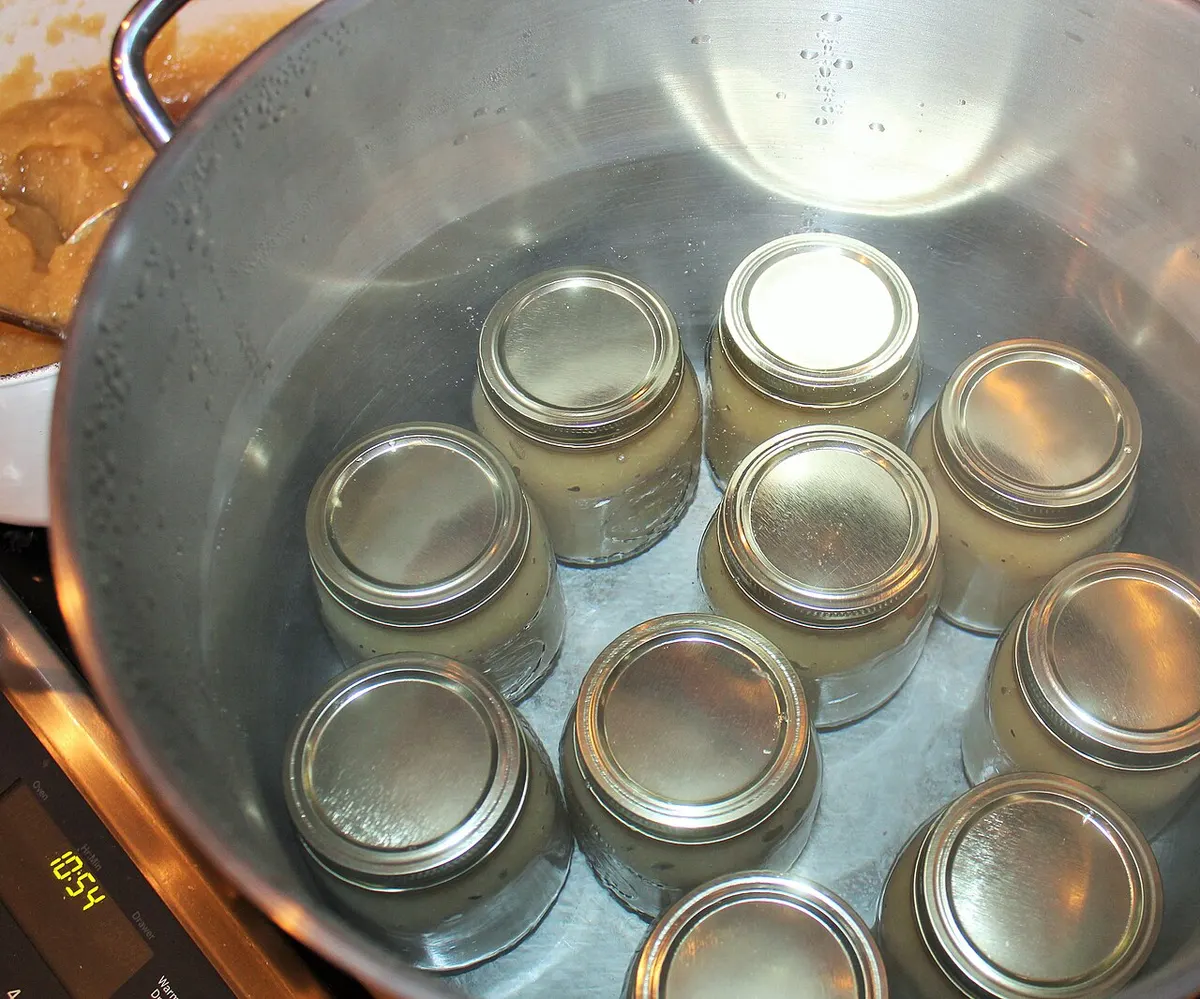
Learning how to can applesauce is about as gentle an introduction to canning as it gets. Apples are an acid food, the sauce goes in a boiling water bath, and the process times are short: 15 minutes for pints and 20 for quarts at sea level.
Short is not the same as optional, though. Every number below comes from the tested applesauce process published by the National Center for Home Food Preservation (NCHFP), which is adapted from the USDA Complete Guide to Home Canning. We checked each one against the current NCHFP page and Penn State Extension before publishing. Follow the process as written and you get shelf-stable sauce. Improvise and you get a science experiment.
Is applesauce safe to water bath can?
Yes. Apples fall on the acid side of the pH 4.6 line, so the tested process uses a boiling water canner, not a pressure canner. If that line is new to you, our guide to water bath vs pressure canning explains why acidity decides the method.
You do not need to add lemon juice for safety. The NCHFP process does not call for it. Penn State Extension mentions lemon juice or ascorbic acid only as a way to limit browning, which is a quality issue, not a safety one.
What the process does require: peeled and cored apples, sauce that is boiling hot when it goes into the jars, 1/2 inch of headspace, and the full processing time for your altitude.
How many apples do you need for applesauce?
Plan on about 3 pounds of apples per quart of finished sauce. Here are NCHFP’s numbers, with the per-jar math done for you.
| Batch | Apples needed | Yield |
|---|---|---|
| 1 quart jar | About 3 lb | 1 quart |
| 1 pint jar | About 1.5 lb | 1 pint |
| Full canner load of quarts | About 21 lb | 7 quarts |
| Full canner load of pints | About 13.5 lb | 9 pints |
| 1 bushel | 48 lb | 14 to 19 quarts |
The range on the bushel is real. Juicier varieties cook down less, and how much you trim matters.
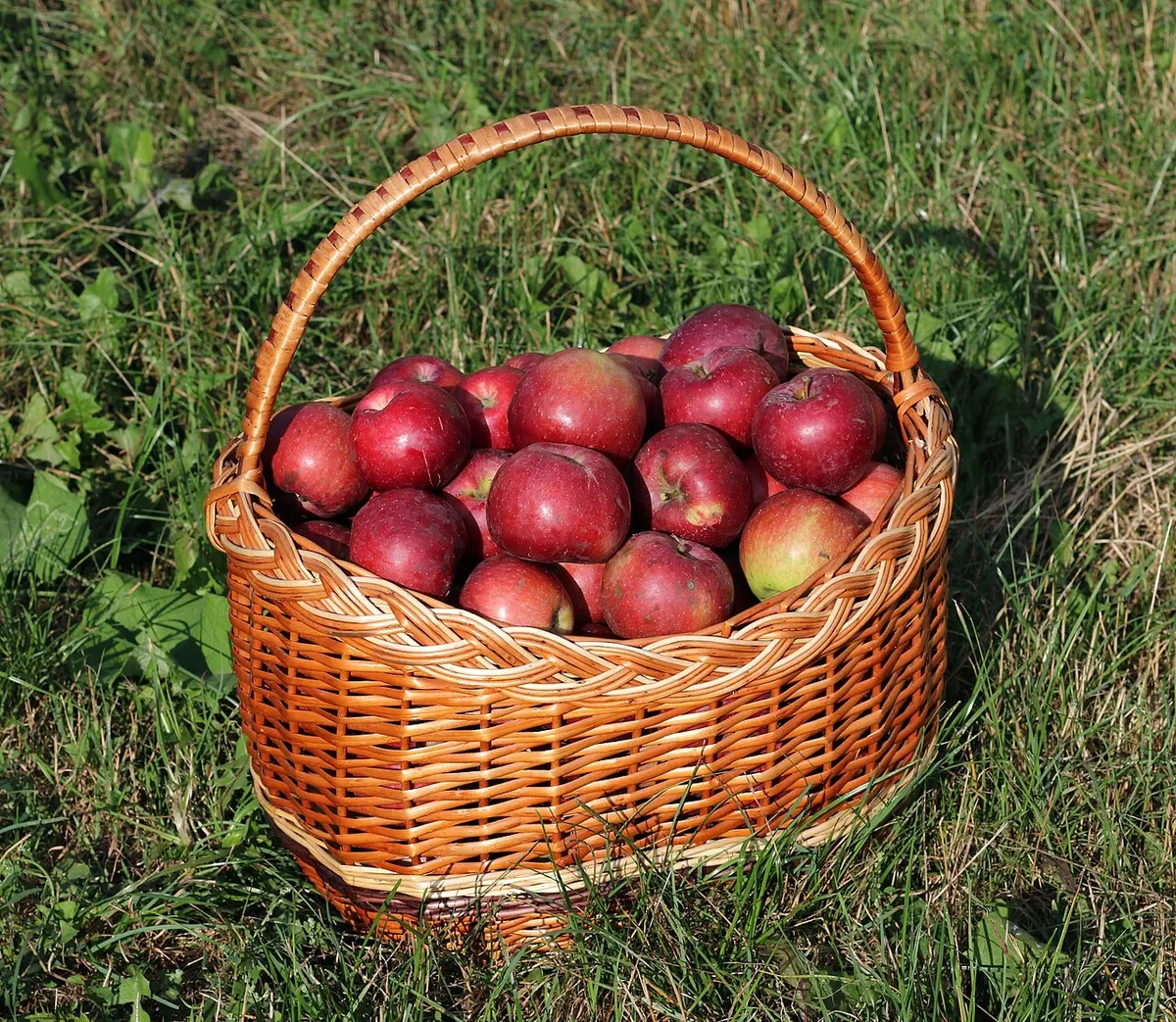 Photo: George Chernilevsky, Public domain, via Wikimedia Commons
What are the best apples for applesauce?
NCHFP says to choose sweet, juicy, crisp apples. Penn State Extension names Golden Delicious, Rome Beauty, Jonathan, Fuji, York Imperial, and McIntosh as examples.
For a tarter sauce, both sources suggest mixing 1 to 2 pounds of tart apples into every 3 pounds of sweeter fruit. Variety affects flavor and texture only. It does not change the processing time.
How to can applesauce, step by step
This is the NCHFP hot pack process, summarized. Read the official NCHFP applesauce page once before you start, and NCHFP’s guide to using boiling water canners if this is your first batch.
- Get the canner going. Fill the canner with enough water to cover the jars by at least 1 inch and preheat it to 180°F, the NCHFP target for hot packed food. Keep clean jars hot until you fill them.
- Prep the apples. Wash, peel, and core. If you want to limit browning while you work, drop the slices into water with ascorbic acid, then drain.
- Cook. Put the slices in an 8 to 10 quart pot with 1/2 cup of water. Heat quickly, stirring now and then so nothing scorches, until tender. NCHFP gives 5 to 20 minutes depending on variety and ripeness.
- Mill or mash. For smooth sauce, press it through a sieve or food mill. For chunky sauce, skip this step.
- Sweeten if you like. Sugar is optional. NCHFP suggests 1/8 cup per quart of sauce, then more to taste.
- Reheat to boiling. The sauce must be boiling hot when it goes into the jars. This is also the single best defense against siphoning.
- Fill the jars. Ladle hot sauce into hot jars, leaving 1/2 inch of headspace. Run a bubble tool or plastic knife around the inside to release trapped air, recheck the headspace, wipe the rims, and put on lids and bands.
- Process. Lower the jars into the canner, make sure the water covers them by at least 1 inch, bring it to a full boil, cover, and start the timer only once the water is boiling. Keep a gentle but steady boil for the whole time in the table below.
- Rest and cool. Turn off the heat, take off the lid, and wait 5 minutes. Lift the jars out level, set them on a towel at least 1 inch apart, and leave them alone for 12 to 24 hours.
If the water stops boiling at any point during processing, NCHFP’s rule is to bring it back to a full boil and restart the timing from zero.
Applesauce canning time by altitude
Water boils at a lower temperature as you go up, so the processing time goes up too. These are the NCHFP times for hot pack applesauce in a boiling water canner.
| Jar size | 0 to 1,000 ft | 1,001 to 3,000 ft | 3,001 to 6,000 ft | Above 6,000 ft |
|---|---|---|---|---|
| Pints | 15 min | 20 min | 20 min | 25 min |
| Quarts | 20 min | 25 min | 30 min | 35 min |
If you do not know your elevation, look it up before canning day. Guessing low is the mistake that matters.
The tested process lists pints and quarts. Stick to those jar sizes for this process.
Can you use a steam canner for applesauce?
NCHFP accepts atmospheric steam canners for naturally acidic or properly acidified foods with a pH of 4.6 or below, as long as the total processing time is 45 minutes or less including altitude adjustments. Every applesauce time above falls under that limit. The conditions: preheat the jars, vent the canner until a steady column of steam pushes the air out, keep the steam at boiling temperature for the whole process, never open the canner to add water, and let jars cool in still air. Penn State Extension lists the atmospheric steam canner as an option for applesauce using the same times.
Can you pressure can applesauce?
You can, though nobody needs to. The NCHFP page includes a short pressure process for hot pack applesauce: 8 minutes for pints and 10 minutes for quarts.
| Canner type | Altitude | Pressure |
|---|---|---|
| Dial gauge | 0 to 2,000 ft | 6 lb |
| Dial gauge | 2,001 to 4,000 ft | 7 lb |
| Dial gauge | 4,001 to 6,000 ft | 8 lb |
| Dial gauge | 6,001 to 8,000 ft | 9 lb |
| Weighted gauge | 0 to 1,000 ft | 5 lb |
| Weighted gauge | Above 1,000 ft | 10 lb |
Note the low pressures. These are specific to applesauce, not the 10 to 15 pounds used for vegetables and meat. Your canner still needs its normal venting and cool-down. If you already own a pressure canner and want a refresher, our pressure canner guide covers the dial versus weighted gauge question.
Gear that makes applesauce day easier
You need a canner deep enough to hold jars on a rack with at least 1 inch of water over the tops, plus a way to turn cooked apples into sauce. Our picks below are based on manufacturer specifications and patterns in owner reviews, not on any hands-on use.
Pantry pick: Granite Ware 21.5-Quart Water Bath Canner Set

A 21.5-quart enamel canner whose rack holds 7 quarts or 9 pints, which lines up exactly with the NCHFP canner loads above. The set adds a jar lifter, funnel, bubble remover with headspace ruler, and lid tool. The listing says it is not suitable for glass or induction cooktops, so check your stove first. Owner reviews are strongly positive, with a rating of 4.7 out of 5 across thousands of ratings.
Pantry pick: Harvest Stainless Steel 20-Quart Canning Pot

The induction-friendly option. The manufacturer lists a flat clad base for induction, glass, and gas, room for 7 quart or 8 pint jars, and a reversible rack for water bath or steam canning. The tradeoff is price: it costs more than enamel and holds one fewer pint per load.
Pantry pick: OXO Good Grips Stainless Steel Food Mill

A food mill strains and purees in one step, which is the job NCHFP's "sieve or food mill" step describes. OXO lists a 2.3-quart stainless bowl, three discs for fine, medium, and coarse texture, and non-slip legs that sit on bowls or pots up to 11 inches across. Rated 4.4 out of 5 across more than 7,000 owner ratings.
Already have a deep stockpot? It works if a rack keeps the jars off the bottom and the water can cover them by at least 1 inch while still boiling. A plain set of pint jars will do the rest. See current listings for jars if you are starting from zero.
Common questions about canning applesauce
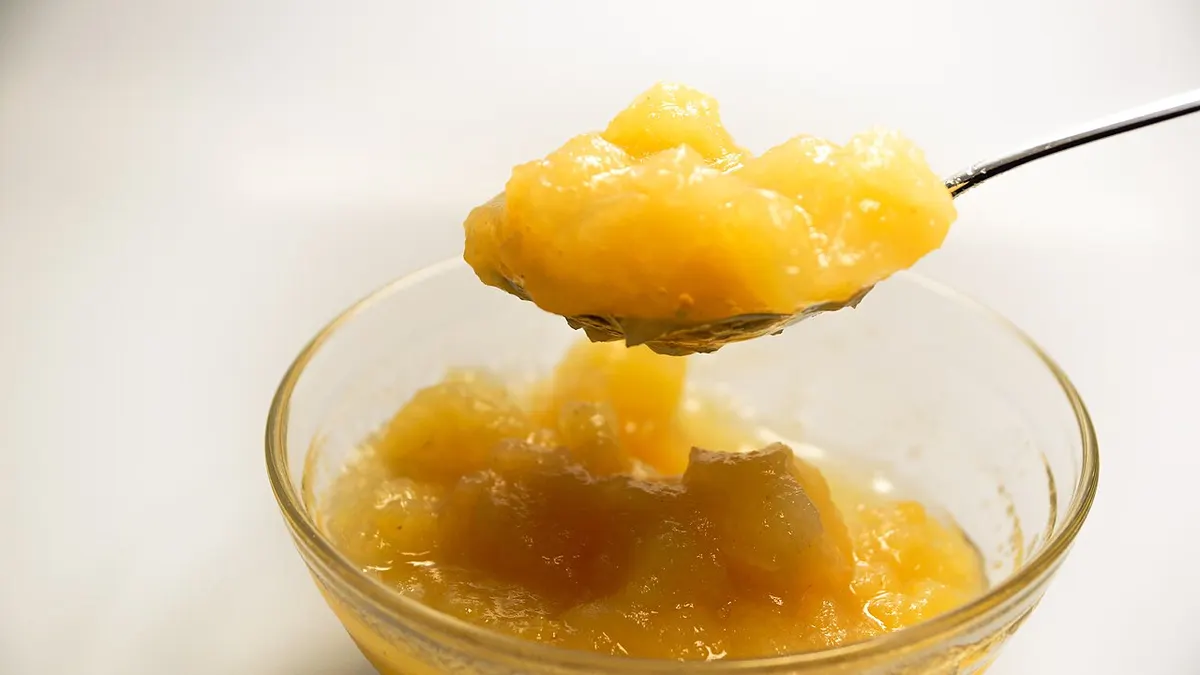 Photo: Taken, CC0, via Wikimedia Commons
Can you can applesauce without sugar?
Yes. Sugar is optional in the NCHFP process and does not change the processing time. Unsweetened sauce is canned exactly the same way.
Can I add cinnamon to canned applesauce?
The tested process does not include spices. Penn State Extension notes that ground cinnamon or nutmeg adds color that can mask some darkening at the top of the jar, which is a cosmetic point. If you want to stay strictly inside the tested process, the simplest move is to stir cinnamon in when you open a jar.
Why does the top of my applesauce turn brown?
Penn State Extension traces it to enzymes reacting with oxygen, usually because the sauce was not heated enough or air bubbles stayed in the jar. Boiling hot sauce, careful bubble removal, and correct headspace help. Ascorbic acid during prep also helps. Browning alone is a quality issue; any sign of spoilage, such as mold, a bulging lid, or an unsealed jar, means the jar is discarded.
How long does canned applesauce last?
Penn State Extension says canned products are best eaten within a year and remain safe as long as the lids stay vacuum sealed. Store jars without bands in a cool, dry, dark place, and check each seal before opening.
Can you freeze applesauce instead?
Yes, and it is the lower-effort route. Penn State Extension says to cool the sauce quickly, pack it in rigid freezer containers with 1/2 inch of headspace for pints and 1 inch for quarts, and use it within 8 to 10 months. Thaw in the refrigerator.
The short version
- Applesauce is an acid food and is canned in a boiling water bath using the NCHFP hot pack process.
- Plan on about 3 pounds of apples per quart, 21 pounds per load of 7 quarts, or 13.5 pounds per load of 9 pints.
- Cook peeled, cored slices with 1/2 cup of water for 5 to 20 minutes, mill or mash, and reheat to boiling.
- Sugar is optional, about 1/8 cup per quart. Lemon juice is not required for safety.
- Leave 1/2 inch of headspace.
- Process pints 15 minutes and quarts 20 minutes at 0 to 1,000 feet; up to 25 and 35 minutes above 6,000 feet.
- An optional pressure process uses 8 minutes for pints and 10 for quarts at low pressures, 5 to 10 lb.
- Let jars cool undisturbed for 12 to 24 hours, then check seals.
Keep reading
If applesauce is your first canning project, start with our beginner’s roadmap to preserving food at home to see how canning fits with fermenting and drying. Then read water bath vs pressure canning before moving on to vegetables, because those play by very different rules. If a pressure canner is on your list, our guide to the best pressure canners for beginners compares the main models.
Primary sources for this article: the NCHFP tested applesauce process, NCHFP’s guidance on atmospheric steam canners, and Penn State Extension’s Let’s Preserve: Apples and troubleshooting applesauce.